This interview has already been published in French on www.impact.sn Here's the link. https://www.impact.sn/Entretien-avec-Boubacar-Boris-Diop-%C2%A0Le-genocide-de-1994-au-Rwanda-est-au-coeur-des-evenements-actuels-en-Republique_a51284.html

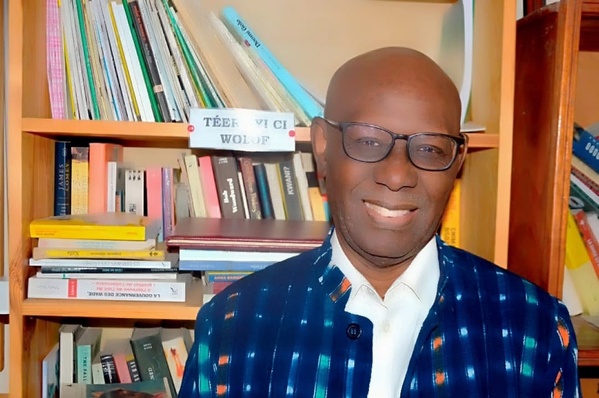
MOMAR DIENG: Judging from what's currently going on between Rwanda and the Democratic Republic of Congo, and with the recent seizure of Goma by M23 forces, it feels like history is repeating itself: “Here we go again, another tragedy in Africa!” Do you have that same feeling of déjà vu?
BOUBACAR BORIS DIOP: No, I would rather say that the situation in Eastern DRC is inextricable from a string of contemporary tragedies unfolding in Syria, Ukraine, Gaza, Yemen, and South Sudan, all conflict hotspots lighting up our geopolitical radar screens. As for the recent capture of Goma by M23 forces, it is a new chapter in the history of Eastern Congo, and everyone is trying to get to the bottom of this. That’s why there’s a lot of talk these days about the colonial redrawing of African borders, particularly at the Berlin Conference of 1884-1885, when several chunks of then Rwandan territory were lopped off to Uganda, Tanzania, and the current Democratic Republic of Congo. There were further territorial adjustments between European countries after World War I, but the Berlin Conference is at the root of it all, and that’s what we need to talk about. Africa was carved up as if it were a gigantic Thanksgiving turkey, with the racist mentality of the European elites of the time preventing them from understanding that they were dealing with real human beings. It bears repeating, at the risk of rousing from their slumber the ghosts of the past, that the African continent is still reeling, particularly in Eastern Congo, from the aftershock of this imperial hubris.
Are you somehow suggesting that Rwanda can legitimately claim parts of the current DRC territory?
Absolutely not. In three decades of clashes of varying intensity, I’ve never heard Rwanda claim the territories it was deprived of at the end of the 19th and beginning of the 20th centuries. Kagame is far too rational and pragmatic to entertain such an idea. Furthermore, this issue calls for dialogue rather than escalatory rhetoric, as some are wont to resort to. But beyond this colonial legacy, we must emphasize that what is happening in Congo is also a direct consequence of the 1994 genocide. Indeed, when the genocidaires were defeated, the French Operation Turquoise helped them retreat to the DRC, where they created the Democratic Forces for the Liberation of Rwanda (FDLR). My point here is that we must remember: these people were the perpetrators of all the atrocities committed in Rwanda, and their exploits have been meticulously documented in books, films, and dozens of reports.
Yet many experts, while admitting that the FDLR did indeed retreat into Congolese territory, accuse Rwanda of playing up this threat to justify its direct support for the M23.
It is a polarizing issue. For some of these experts, the FDLR have seen their numbers dwindle over time, while for others, they are stronger than ever, having merged into a large anti-Rwanda coalition and gained experience from fighting alongside the Congolese regular army. They have often relied on the support of the Nyatura armed group, made up of Congolese Hutus and sympathetic to the genocidal ideology. That being said, in the minds of Rwandans who know from intimate experience what the word genocide means, a single FDLR member is one genocide perpetrator too many. So, we’re not talking here about a normal threat from a normal armed group.
There’s a tendency to judge current events as if the genocide never happened, but with such a denialist approach all you ever come up with are circular, baseless arguments. The genocide is the living flesh of what is happening in Eastern Congo because, when examining history, troubling similarities emerge between the discrimination against the Tutsis after the so-called Hutu Social Revolution in 1950s Rwanda and the real apartheid faced by Rwandophones in Congo, discrimination fueled by nauseating hate speech and marked by small-scale killings, all pending a generalized ethnic cleansing. I’m not saying that a new anti-Tutsi genocide is inevitable, but the mere fact that it’s a possibility should alarm us. I recently came across an archive document from 1965, and even back then, Rwandan-speaking Congolese were not allowed to take part in elections.
Closer to our time, they were simply banned from participating in the "Conférence Nationale Souveraine" in erstwhile Zaire, deemed foreigners in the only country they had ever lived in. And in recent years, when tensions ratcheted up between Rwanda and the DRC, there were also, in addition to the usual violence, public scenes of cannibalism. Picture yourself, for a moment, as a Rwandan who sees or hears such horrors from Kigali, Kibuye, or Butare, and see if you can empathize with their horror. Knowing their recent history, Rwandans take all this stuff very seriously, and they have every reason to sense that another genocide against their people is in the works, in a neighboring country to wit, but this time they won’t be fooled.
Does this justify the existence of the M23?
Things can’t be that simple, but it’s clear that many young fighters in the M23 consider themselves to be in a state of self-defense. And most of those who criticize them now turned a blind eye when Tutsis were being slaughtered in 1994.
The fact is that after being driven out in 2012 and 2013, the M23 is back in the part of Congolese territory it occupies today. Rwanda is accused of backing the M23. Do you consider this to be true?
Although it’s difficult to be one hundred percent sure, so far away from the theater of operations, I have no doubt in my mind that Rwanda has a military footprint in the Democratic Republic of Congo. Moreover, Kigali itself only vaguely denies it. After all, Rwanda has a tradition of direct intervention in DRC, dating back to the end of the genocide, and it’s an open secret that General James Kabarebe drove Mobutu out of his palace to install the elder Kabila. That being said, we should refrain from inflating the argument, to the point of implying that the M23 doesn’t exist for real, that it’s just a front for the Rwandan army. Nothing could be further from the truth.
By pointing out this geopolitical aspect, do you mean that Rwanda is engaged in a preemptive war against a potential invasion launched from Congolese territory?
In the face of repeated threats from Tshisekedi to invade Rwanda, the country has set up an air defense system. It’s counter-espionage services are also nipping in the bud potential infiltrations from the FDLR, whose agents are ever poised to destabilize the country. I think it is in Rwanda’s strategic interest to gain a firm control of its border with DRC. It cannot live in a state of steady high alert. At one point, it was even thought that Kagame and Tshisekedi were moving toward a sort of modus vivendi, as their personal relationship seemed cordial. Nothing ever suggested any expansionist temptation on Rwanda’s part, as I said a moment ago. In this day and age, it is a strategic miscalculation entailing high risks and low, very minimal rewards. When you closely monitor the post-genocide situation in Rwanda, you realize that for Kagame the best response is to address the country’s health and education issues, among other societal challenges.
But Rwanda may want to avoid direct armed confrontation and favor a proxy war.
I see your point, but if Rwanda’s influence over the M23 is undeniable, we must not, once again, make a mountain out of a molehill. Like it or not, the M23 rebels are citizens with very specific demands, such as recognition of their Congolese nationality and the destigmatization of an ethnic identity that paints a target on their backs. In the end, Kigali’s support for the M23 should not lead us to mistake the tree for the forest. The real issue is the active presence of the FDLR in the Congo and their efforts to normalize genocidal ideology throughout the country, not just in its eastern part.
Do you view the capture of Goma, the capital of South Kivu, as a watershed in the history of the Great Lakes Region?
First of all, it’s surprising that Goma fell so quickly, almost without a fight. Even if the entire Rwandan army had been engaged in this battle, it would still be incomprehensible, given that you had about a dozen other armies, the most prominent of which were those from South Africa and Burundi, not to mention the famous white mercenaries... As for the fall of Goma itself, it could eventually mark a major political turning point. Some are even discussing the possibility of a power-sharing agreement that would crown the victory of the M23. But beyond any potential tactical arrangements, it’s clear that Kinshasa will have to tone down its bellicose rhetoric, to bring it down a notch.
What do you mean by that?
There was a sense, not long ago, that Tshisekedi naively thought he could get rid of the M23 by militarily crushing Rwanda. To increase his odds, he recruited hundreds of European mercenaries, involved several armed groups, including the openly genocidal FDLR, and convinced some other African countries to join in the action. This “war to end all wars” initiative must have cost a fortune, but was the juice worth all the squeeze? Even if Goma were to be returned, the central government in Kinshasa cannot fail to grasp that direct military confrontation with Kigali is much more complicated than it looks. Internally, Tshisekedi is under fire from critics who blame him for the humiliating defeat, and this is undermining his authority.
I have read and heard a lot recently about the situation in Congo, and what strikes me is Tshisekedi's utter isolation: among the political elite, nobody is publicly sticking out their necks for him.
Well, it is all fair and square, for Tshisekedi fell into a trap of his own making, and his political rivals are gleefully watching from the sidelines. Tshisekedi was truly convinced he could reap political gains from an easy military victory over Rwanda, and so we heard him issue threats, warn that he would not hesitate to “ask the joint chambers for permission to officially declare war on Rwanda,” and other dramatic pronouncements. He even seemed to toy with the fantasy of a casualty-free war limited to some aerial bombardments. From a geopolitical standpoint, an aerial offensive would have been sheer madness. But that didn’t work either, although there was some sort of sacred union around Tshisekedi as war president, rooted in a deep, almost irrational resentment toward Rwanda. At the rate things are evolving, this hate-driven rallying around the flag consensus won’t last long. My conviction is that there will be a before and an after Goma 2025.
Can a federal solution be envisaged for the Democratic Republic of Congo, given the vastness of the country? Would this be desirable for both Congo and Africa?
Unless I am mistaken, the only African country where the colonial borders have been questioned is Sudan, and partition there would have never materialized without the blessing of the Obama administration. The Congo is not Sudan because, while it is a colossus with clay feet where things can quickly unravel, it is the country of Lumumba, so it still stands as a powerful trope in the oppositional lore of national liberation struggles. Pace all the usual caveats, Congo’s sheer size lends credibility to the federalist option, but only the Congolese know which formula is best suited to their situation. However, and with all due respect to the Congolese, one must point out that it is due to the weakness of the central government that so many armed groups have been wreaking havoc, rendering the country ungovernable to better plunder it with impunity. There are many men and women of goodwill in Congo, and it’s important to tell them this honestly and in friendship, so they can embark on a much-needed soul-searching. This huge country—not only in size—needs a leader of the caliber of Nyerere or Mandela. One need only listen to its current president to sense that he is not up to this historic task, the man is out of his depths. By resurrecting the demons of hatred, one misses out on the golden opportunity to bring to a close the long series of tragic events inaugurated in January 1961 with the assassination of Patrice Lumumba.
There is much talk of natural resources lying at the heart of the violence perpetrated by hundreds of armed groups in Eastern Congo. What do you have to say about that?
The armed groups in DRC tend to proliferate like swamp mosquitoes, and today they number close to 200. Interestingly enough, we are led to believe that there is only one rebel group: the M23. I think one of the most fascinating aspects of our time is that the more we refine our informational tools, the less we are able to access real knowledge of the facts. We almost never know how to make head or tail out of it, and ever since AI got involved, we can't even trust our eyes and ears anymore. This is probably why some say we are in the age of post-truth...
How does this play out, in the case at hand?
What I mean is that the situation in Eastern Congo seems so complicated that one is tempted to oversimplify things, in the hope of making sense of it all. So, the bedtime story goes like this: a country that only wants to live in peace sees its eastern part attacked by a deceitful and belligerent neighbor relying on a rebel movement with the sole aim of plundering its mineral wealth. The upside, with such a narrative, is that it draws a bright red line between good and evil. Hyperbole aside, this vivid picture is not far from reality. What I find striking here are the silences, the gaping holes in memory. First, when we stick to the facts, the DRC is unfortunately the playground for dangerous, volatile war games involving a plethora of nations, and it is hard to understand why Rwanda is singled out. During what was called the Great African War of Congo, Zimbabwe, Uganda, Malawi, Angola, to name a few, took part in its plunder. And today, South Africa is back to secure the mining operations of its nationals in Katanga and, to a lesser extent, in Kivu. I haven’t even mentioned the big Chinese or Western mining companies, or all those adventurers who “work” directly with generals or influential ministers. In its Manichaeism, the fable conceals all this, painting a lively picture of young people busy under the hot sun, plowing, digging up the earth to illegally extract coltan and other critical minerals for M23—and thus for Rwanda. If we must picture them fully engaged in this task, how then do they find time to wage a war of liberation?
So, for you, the charge that Rwanda is stealing Congo’s mineral resources is baseless, as it seems to rest on these clichés?
Yes, and these clichés end up dulling public opinion. By hearing them repeatedly, we unconsciously begin to take them for granted. And the question that they beg is always asked in a sarcastically triumphant tone, to shut up skeptics: “How do you then explain that Rwanda, a country that doesn’t produce coltan, is exporting it?” It always works, because few people know that Rwanda is actually one of the major world producers of coltan. It even ranks second, after the DRC, and ahead of Brazil, Nigeria, and... China!
Rwanda also produces gold and tin, and only a month ago, significant oil deposits were discovered near its border with Burundi. It is far from being the mineral desert that some want to portray it as, a country that can only survive thanks to the resources of its big neighbor, the Democratic Republic of Congo. “Rwanda, a country that exports minerals while producing none,” is one of those asinine tropes that circulate on social media, taken up by influencers tasked with drilling it into the brains of people that are all too easy to fool because they have other things to worry about. We can only call for vigilance because, while most of those who criticize Rwanda and Kagame are sincere, click-baiting shills and trolls for hire make up a small but effective minority. A major journalistic investigation should focus on the mining issues in Eastern Congo, shedding light on who exploits these resources and who, within the Congolese political and military apparatus, is in cahoots with these profiteers. (TO BE CONTINUED…)
Traduction du français à l'anglais : El Hadji Moustapha DIOP


 FRANCE